 Return
“
Circularity starts with collection. In many of our markets, the challenge is not only recycling but building the systems that make it possible. Through initiatives like Switch2CE and IslandPlas, we are working with partners to strengthen collection ecosystems and create the conditions for a truly circular packaging model.”

Sonia Ventosa
Group Sustainability, Communications & Public Affairs Director
At ECCBC, addressing plastic waste requires systemic change. Under The Coca-Cola Company’s World Without Waste strategy, we have committed to:


1
Redesign Packaging for Waste Reduction and Recyclability
Redesign is our most immediate lever to reduce environmental impact. By improving material efficiency and applying circular design principles, we minimize virgin material use while enabling higher recyclability.
Lightweighting and Neck Reduction
In 2025, our structured PET lightweighting program resulted in a 5% reduction in PET content, lowering plastic consumption, and associated GHG emissFions.
Neck reduction and standardization of bottle finish further optimize material efficiency, enhance line performance, and ensure compatibility with high-efficiency production molds.
These initiatives contribute simultaneously to cost discipline and environmental performance.
Transition to Clear PET – “Let’s Be Clear”
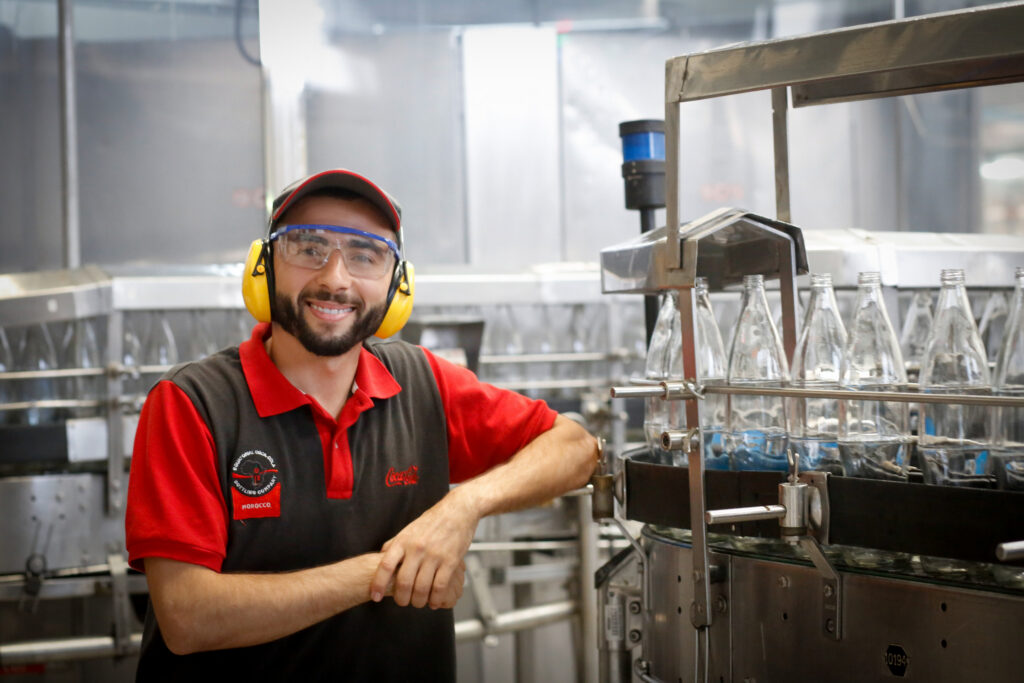
Through the “Let’s Be Clear!” campaign, we transitioned Sprite packaging in Morocco and Ghana from green to clear PET, improving recyclability and enabling future food-grade rPET use.
Clear PET increases feedstock value for recyclers and supports the development of closed-loop systems aligned with future bottle-to-bottle ambitions.
Returnable Glass Bottles (RGB)
We relaunched Returnable Glass Bottles in markets where reuse systems are viable. RGBs can be reused up to 25 times and generate up to three times fewer GHG emissions than single-use bottles over their lifecycle.
Beyond environmental gains, RGB systems reinforce traditional retail networks in West Africa, where affordability and circularity are closely linked.
Standardization and Simplification
We are progressively reducing SKU complexity and eliminating packaging components that hinder recyclability, including unnecessary labels and adhesives.
Standardization improves sourcing efficiency and facilitates higher recycling rates across Business Units.
2
Implement Circular Economy Practices
Transitioning from linear recovery to structured bottle-to-bottle systems is central to our strategy.
Switch2Circular Economy (Switch2CE)
 Morocco
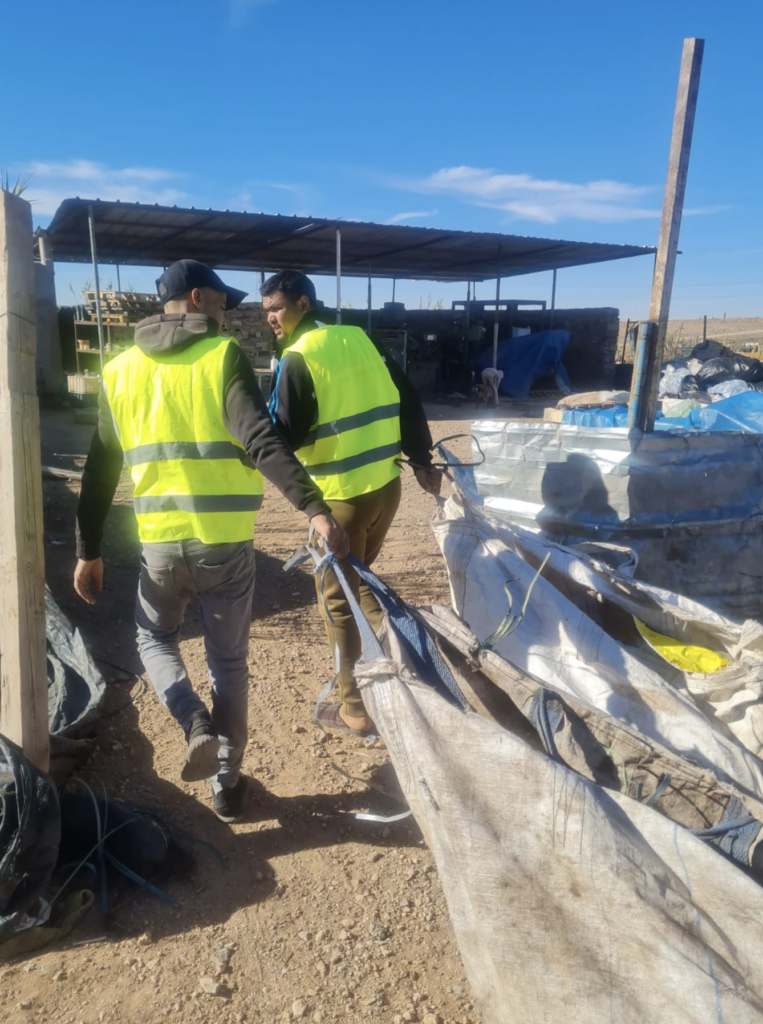
Switch2CE represents Morocco’s first structured bottle-to-bottle circular economy pilot. Delivered in partnership with UNIDO, Chatham House, Roots for Sustainability, ThirdWay Partners, and La Générale de Recyclage, and co-financed by ECCBC under a €2.5 million EU-funded program, the project operates in Casablanca and Tangier.
Key components include:
- End-to-end PET recovery and processing
- Infrastructure strengthening (sorting hubs and cooperatives)
- Capacity building for informal collectors
- Policy dialogue to enable future food-grade rPET standards.



Formalizing the Informal Sector
 Guinea-Conakry
With support from The Coca-Cola Foundation and partners including Azahara Foundation and Roots for Sustainability, ECCBC is formalizing waste collection by organizing waste pickers into cooperatives.
Training programs improve sorting quality, safety standards, and income stability. The project achieved a milestone by being able to export its container of PET to an international recycler.
This initiative demonstrates that circularity must also be inclusive.

3
Support the Creation of Collection and Recycling Schemes
Collection remains the largest structural barrier to circularity in many of our markets. Our strategy focuses on coalition-building, digital innovation, and informal sector integration.
Reverse Vending Machines (RVMs)
Morocco
As part of our effort to strengthen structured collection systems, ECCBC deployed 25 Reverse Vending Machines (RVMs) across major public universities in Marrakech, Settat, and Casablanca.
These machines allow consumers to return PET bottles and cans in exchange for rewards through the Sparklo application. By targeting high-footfall student environments, the initiative promotes recycling habits among younger consumers while improving traceability and data collection.
Digital and Community Models
 Algeria
Through Nrecycli, an Algerian digital recycling platform that connects citizens to collection points through a mobile application, ECCBC deploys a digital recycling platform enabling citizens to locate drop-off points and track recycling impact.
Through Polyrec, a local recycling company operating primarily in the Wilaya of Oran, Smart Recycling Bottles (SRBs) have been installed in high-footfall areas to strengthen structured collection.
Additionally, the Cap Challenge links recycling with social impact by funding medical support for children with xeroderma pigmentosum.
IslandPlas
 Cape Verde
 Sao Tomé and Principe
ECCBC supports the IslandPlas initiative, a three-year, US$10 million program (2024–2026) implemented with The Coca-Cola Foundation and IUCN.
Objectives include:
- Empowering ~9,600 informal waste collectors
- Recovering 14,000 tons of plastic waste
- Investing US$2 million in recycling innovation
- Facilitating multi-stakeholder workshops
IslandPlas strengthens circular infrastructure in fragile island ecosystems and serves as a scalable regional model.
Beach clean-ups
ECCBC conducts beach clean-up campaigns in its different markets, mobilizing employees and communities to prevent plastic leakage into marine ecosystems and raise awareness on responsible waste management. These initiatives reinforce our collection efforts and support broader ecosystem protection.
4
Introduce rPET and Shape Enabling Policy Frameworks
Transitioning to food-grade recycled PET (rPET) requires more than infrastructure. It depends on regulatory clarity, industry coordination, and stable access to certified feedstock. ECCBC actively contributes to policy frameworks that enable circular packaging in our key markets.
AIRE Coalition
Since 2024, ECCBC has chaired AIRE (Alliance for Packaging Innovation and Recycling), a multi-stakeholder coalition advancing Extended Producer Responsibility (EPR), eco-design standards, and the future authorization of food-grade rPET in Morocco.
NPAP
 Ghana
Ghana
ECCBC participates in Ghana’s National Plastic Action Partnership (NPAP), a public-private platform supporting systemic solutions to plastic waste, including EPR frameworks, regulatory enforcement, and recycling ecosystem strengthening.

APAB
Algeria
In Algeria, ECCBC contributes to industry coordination through APAB (Association des Producteurs Algériens de Boissons), the national beverage producers’ association.
Through APAB, ECCBC engages with public authorities and sector stakeholders to advance structured packaging governance, strengthen dialogue around Extended Producer Responsibility (EPR), and support the development of a regulatory framework.